What are the common electronic originals on PCBA
2024-12-14
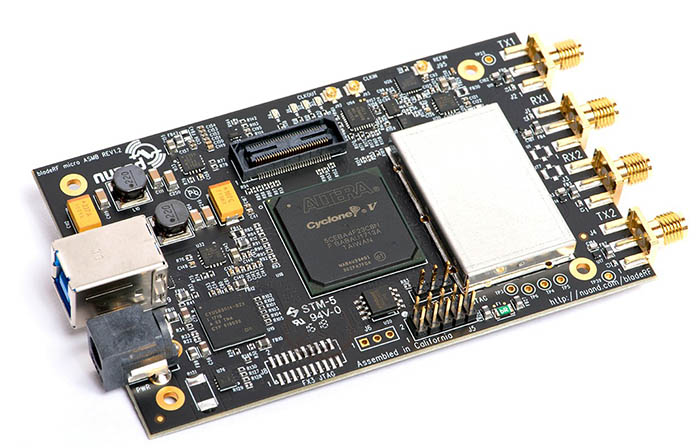
The common electronic components on PCBA are as follows:
Passive components
Resistors: They have functions such as limiting current, dividing voltage, and diverting current, and can be divided into fixed resistors, variable resistors (potentiometers), etc.
Capacitor: a component that stores charge and electrical energy, commonly used in circuits such as filtering, coupling, tuning, and bypass, including ceramic capacitors, electrolytic capacitors, metal film capacitors, polyester film capacitors, etc.
Inductor: also known as induction coil, has the function of storing magnetic energy and is widely used in power filtering, signal processing, and other fields.
Transformer: composed of iron core (or magnetic core) and coils, used to transform voltage, current, and impedance, realizing functions such as AC voltage transformation, current transformation, power transformation, impedance transformation, and buffer isolation.
Passive components
Resistors: They have functions such as limiting current, dividing voltage, and diverting current, and can be divided into fixed resistors, variable resistors (potentiometers), etc.
Capacitor: a component that stores charge and electrical energy, commonly used in circuits such as filtering, coupling, tuning, and bypass, including ceramic capacitors, electrolytic capacitors, metal film capacitors, polyester film capacitors, etc.
Inductor: also known as induction coil, has the function of storing magnetic energy and is widely used in power filtering, signal processing, and other fields.
Transformer: composed of iron core (or magnetic core) and coils, used to transform voltage, current, and impedance, realizing functions such as AC voltage transformation, current transformation, power transformation, impedance transformation, and buffer isolation.
 http://sznewmeto.com/
 Active components
Diode: It has unidirectional conductivity and is widely used in circuits such as rectification, detection, and voltage stabilization. It can achieve functions such as voltage regulation, signal amplification, and switch control in circuits.
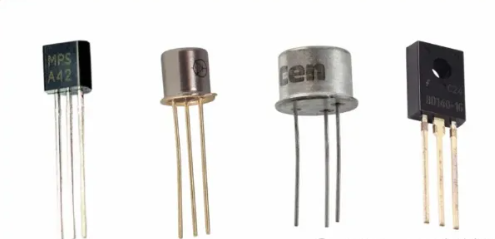
Transistors: including bipolar transistors, field-effect transistors, etc., with functions such as amplification and switching, commonly used in amplification circuits, oscillation circuits, switching circuits, etc.
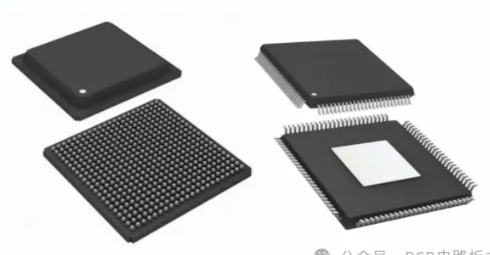
Integrated circuit: Integrating multiple electronic components onto a single chip, with advantages such as small size, low power consumption, and stable performance, such as operational amplifiers, logic gate circuits, microprocessors, etc.
Diode: It has unidirectional conductivity and is widely used in circuits such as rectification, detection, and voltage stabilization. It can achieve functions such as voltage regulation, signal amplification, and switch control in circuits.
Transistors: including bipolar transistors, field-effect transistors, etc., with functions such as amplification and switching, commonly used in amplification circuits, oscillation circuits, switching circuits, etc.
Integrated circuit: Integrating multiple electronic components onto a single chip, with advantages such as small size, low power consumption, and stable performance, such as operational amplifiers, logic gate circuits, microprocessors, etc.
 http://sznewmeto.com/
 Other components
Sensors: They can sense physical quantities or states in the environment and convert them into electrical signals for output. Common sensors include temperature sensors, humidity sensors, light sensors, pressure sensors, etc.
Crystal oscillator: refers to a crystal oscillator that can provide a stable clock signal for synchronous circuit operation.
Switch: Used to cut off, connect or switch circuits, such as button switches, toggle switches, micro switches, etc.
Relay: It is an automatic control device that produces a jumping change in output when the input quantity (electric, magnetic, sound, light, heat) reaches a certain value.
Connector: Its main function is to connect PCB and other devices, such as socket connectors, signal connectors, etc.
Light emitting diode (LED): commonly used for indicator lights, display screens, etc.
Fuse: When the current in the circuit is too high, the fuse will melt and protect the circuit.
Sensors: They can sense physical quantities or states in the environment and convert them into electrical signals for output. Common sensors include temperature sensors, humidity sensors, light sensors, pressure sensors, etc.
Crystal oscillator: refers to a crystal oscillator that can provide a stable clock signal for synchronous circuit operation.
Switch: Used to cut off, connect or switch circuits, such as button switches, toggle switches, micro switches, etc.
Relay: It is an automatic control device that produces a jumping change in output when the input quantity (electric, magnetic, sound, light, heat) reaches a certain value.
Connector: Its main function is to connect PCB and other devices, such as socket connectors, signal connectors, etc.
Light emitting diode (LED): commonly used for indicator lights, display screens, etc.
Fuse: When the current in the circuit is too high, the fuse will melt and protect the circuit.
Integrated circuit is an electronic component that integrates multiple electronic components on a chip, which has the advantages of small size, low power consumption and stable performance. In PCBA, integrated circuit is the key component to realize various complex functions, such as digital signal processing, analog signal processing, communication interface, etc. Common integrated circuits include operational amplifiers, logic gates, microprocessors, etc., which are widely used in various intelligent devices and systems.

Sensors can sense physical quantities or states in the environment and convert them into electrical output. In PCBA, sensors are often used to detect temperature, humidity, light, pressure and other parameters to provide data support for intelligent control of electronic devices. There are many kinds of sensors with different performance, and choosing the right sensor is crucial to improving the performance and user experience of electronic devices.

Sum up
In the PCBA design and manufacturing process, the correct selection and rational use of electronic components is very important. Designers need to choose the appropriate type and specification of electronic components according to the functional requirements, performance requirements and cost considerations of the circuit. At the same time, it is also necessary to consider the layout of components, welding process and reliability issues to ensure that the quality and performance of the circuit board meet the expected requirements.
In short, electronic components are an indispensable part of PCBA design and manufacturing. Through in-depth understanding of the role and application scenarios of various types of components, circuit board design and manufacturing can be better, and the quality and performance of products can be improved.
In the PCBA design and manufacturing process, the correct selection and rational use of electronic components is very important. Designers need to choose the appropriate type and specification of electronic components according to the functional requirements, performance requirements and cost considerations of the circuit. At the same time, it is also necessary to consider the layout of components, welding process and reliability issues to ensure that the quality and performance of the circuit board meet the expected requirements.
In short, electronic components are an indispensable part of PCBA design and manufacturing. Through in-depth understanding of the role and application scenarios of various types of components, circuit board design and manufacturing can be better, and the quality and performance of products can be improved.
PCB testing fixture: a key tool for improving the quality of electronic products
RF circuit board and PCB layout characteristics
Related Article