ICT(In-circuit Test) Online test process sharing
2024-11-20
I guess many friends have similar questions when using electronic products such as mobile phones, computers, and speakers. How do manufacturers of these products ensure product quality and do they need to undergo testing before leaving the factory?
In fact, a legitimate electronic product needs to undergo multiple rounds of testing before leaving the factory. Common important tests include AOI visual testing, ICT online testing, FT functional testing, and laboratory extreme testing.
Here, I will briefly introduce the content of ICT (In circuit Test) online testing for electronic components and circuit boards.
In fact, a legitimate electronic product needs to undergo multiple rounds of testing before leaving the factory. Common important tests include AOI visual testing, ICT online testing, FT functional testing, and laboratory extreme testing.
Here, I will briefly introduce the content of ICT (In circuit Test) online testing for electronic components and circuit boards.
Test preparation stage
Create testing fixtures: Design and manufacture specialized testing fixtures based on the size, shape, and component layout of the circuit board. The function of the fixture is to fix the circuit board, ensure that the test probe can accurately contact the test points on the circuit board, and maintain the stability of the circuit board during the testing process
Prepare testing equipment: Select appropriate ICT testing instruments and ensure their proper functioning. Testing instruments usually have multiple testing functions, such as open circuit testing, short circuit testing, component function testing, etc., which can meet the testing needs of different types of circuit boards. At the same time, it is necessary to connect the testing instrument to a computer or other control equipment in order to load the testing program and transmit the testing results
Design testing program: Based on the schematic diagram of the circuit board, component specifications, and testing requirements, use professional testing software to write the testing program. The testing program includes detailed information such as testing parameters, testing steps, and testing conditions for each testing point to ensure the accuracy and completeness of the testing.
Circuit board installation and connection stage
Installation of circuit board: Carefully place the circuit board to be tested in the testing fixture and firmly fix it with the fixing device on the fixture to prevent displacement during the testing process
Connect test probe: Connect the test probe to the corresponding interface on the test fixture, so that the probe can achieve good electrical contact with the test points on the circuit board. During the connection process, it is necessary to ensure that the probe is firmly connected to avoid poor contact
Connect test probe: Connect the test probe to the corresponding interface on the test fixture, so that the probe can achieve good electrical contact with the test points on the circuit board. During the connection process, it is necessary to ensure that the probe is firmly connected to avoid poor contact
Tools/raw materials
Testing system, circuit schematic, quality parameters, etc
Testing system, circuit schematic, quality parameters, etc
Method/Steps
1.ICT online testing is the first testing position after SMT component placement, which can effectively prevent mass production quality problems at the circuit board level. The first step in ICT job testing is to conduct open and short circuit tests on the circuit board. If there is an open or short circuit outside the system settings on the circuit board during testing, an error message will be displayed.

2.If there are no issues with the circuit board, then begin component testing. The testing system will separately test independent components such as resistors, capacitors, inductors, diodes, and transistors. In this step, diodes and transistors mainly undergo forward and reverse conduction tests to determine whether they are connected in reverse or incorrectly.

3.Due to limitations in the distribution of testing pins and the size of the circuit board, not all discrete components can be tested. The next step will be modular testing, which involves testing a local circuit as a whole to verify its quality.

4.The above tests are all completed without powering on the product, known as unpowered tests. After passing the non powered test, the product will be powered on for testing, which means that the testing system will power on the product's power supply port to put it into a charged state. This power on process is controlled by software.

5.After power on, voltage tests will be conducted on important voltage points of the product, transistor switch characteristic tests, and high and low level tests on the input and output ports of the chip. The test content shown in the figure is the input-output test result of the working status of the CAN bus transceiver.
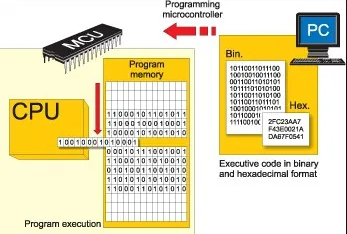
6.If there are no issues with the previous tests, the system will begin the process of writing programs to the product's main control chip. This process is called programming, and the programming steps are not required for all products, depending on the product's functionality. After completing the programming, the main control chip of the product will start working, while driving the entire product to work.
7.After the product starts working, some components need to be tested, such as large capacitor voltage testing, angle sensor testing, etc. During these periods, as long as the product is running, it can be detected.

8.If there are no problems during the power on test, the system will start to power off the product, then discharge the stored electricity in the large capacitor on the product, and finally prompt that the test has passed.

http://sznewmeto.com/ this our website
Why is ICT testing rarely used in PCBA production
How to test PCB?
Related Article